- ホーム
- FELICE... FELICE... / IRIS
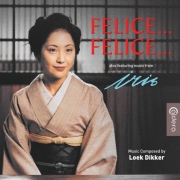
FELICE... FELICE... / IRIS
価格(税込):
¥5,478
| レーベル: | CALDERA(GM) |
| 品番: | C6071 |
| 発売日: | 2026/06/19 |
| フォーマット: | 1CD |
Music Composed and Orchestrated by Loek Dikker
Album Produced by Stephan Eicke, Loek Dikker
Executive Producers for Caldera Records: John Elborg, Stephan Eicke
Album Art Direction and Design by Luis Miguel Rojas
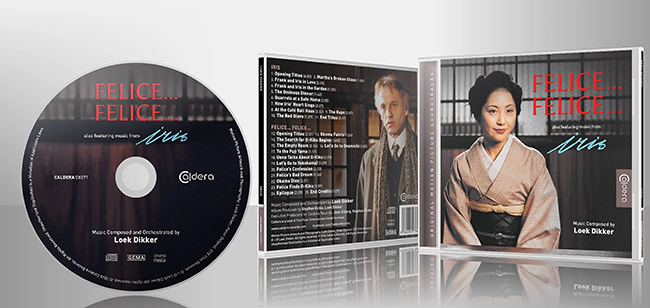
1987年の映画『IRIS』および1998年の映画『FELICE... FELICE...』のオリジナル・サウンドトラックがリリース!音楽は「ローゼンシュトラッセ」、「ボディ・パーツ」のローク・ディッカー。
トラックリストここで取り上げる両作品とも、異質な領域に足を踏み入れる人物を軸に物語が展開しています。本作のタイトルにもなっている獣医「アイリス」にとって、この「異質さ」は主に比喩的なものです。30歳の彼女は、建築家である年上の夫と長年、大都市で暮らしてきました。二人の間には、次第に緊張が高まり始めていました。ある日、彼女は夫のもとを離れ、見知らぬ村へ移り住み、新たな生活を始めることにします。しかし、すぐに地元の人々が彼女を「よそ者」として嫌っていることに気づきます。そして、必然的な結末が訪れます。内なる崩壊が彼女の人生を根底から覆してしまうのです。
『IRIS』におけるローク・ディッカーの音楽は、この映画のインパクトにおいて中心的な役割を果たした。作曲家が映画音楽を手掛け始めたのは、そのわずか数年前のことだった。ラテンアメリカのボレロをモデルにした軽快なメインタイトル曲は、当初、軽やかさを醸し出している。ディッカーにとって、それはアイリスの活力を表現するものだった。敵意が高まるにつれ、音楽は暗さを増していく。それは、彼女が暮らす田舎の環境がもたらす不安を反映している。フィナーレでは、受け入れられたことでボレロが再び登場する。こうして物語の弧が完結する。
フェリーチェ・ベアートを大まかなモチーフとしたピーター・デルプートの映画『FELICE... FELICE...』は、幻想と真実の間の緊張関係を探求している。それらは互いに絡み合った力であり、まるで闘技場にいる二頭の雄牛のように、それぞれが優位に立とうと激しく競い合っている。
1895年(映画が初めて上映された年)、写真家のベアートはしばらくの不在を経て日本に戻ってくる。かつてはアジアの生の姿を捉えた先駆的なフォトジャーナリストであった彼は、すでに写真を捨てていた。ヨハン・レイセンは、喪失によって心を空洞にされ、初めて日本に足を踏み入れた際に出会った妻・オキクを今もなお悼み続ける男を、悲しみに満ちた重厚な演技で演じている。
ピーター・デルプート監督による、記憶の本質についての穏やかで賢明かつ感動的な考察は、変化しゆく日本、文化の違い、そして「忘れること」や「忘れ去られること」への恐怖を探求している。この作品には繊細な音楽が求められた。作曲家のローク・ディッカーは、ベアートの落ち着きのなさ、希望、そして欲望を捉えつつ、同時に失われた場所の写真にふさわしい音楽的伴奏を提供するという困難な課題に直面した。ローク・ディッカーは東洋と西洋のバランスを模索した。彼は、自分の音楽がほとんど気づかれないほど自然に流れることを望んでいた。彼は次のように述べている。「多くのシーンは、薄いガラスのように繊細です。これは私にとってさらなる難題でした。」 --- レーベルより。
Caldera Records proudly presents Loek Dikker's scores for the films "Iris" from 1987 and "Felice… Felice…" from 1998.
Both films featured here revolve around an individual entering foreign territory. For Iris, the veterinarian who gives the first film featured here its title, this foreignness is largely figurative. For years, the thirty-year-old has lived with her older husband, an architect, in a big city. Tensions have started to simmer. One day, she leaves her husband to move to an unfamiliar village to begin again. But she soon finds that the local population resents her as a foreigner. It comes as it must: an implosion upends her life.
Loek Dikker's score for "Iris" proved central to the film's impact. The composer had started writing for film only a few years before. The buoyant main title ? modeled on a Latin American bolero ? initially suggests lightness. For Dikker, it expressed Iris's vitality. As hostility mounts, the music darkens. It reflects the unease of her rural surroundings. In the finale, acceptance brings the bolero back. It completes the arc.
Peter Delpeut's film "Felice… Felice…", loosely inspired by Felice Beato, explores the tension between illusion and truth. They are forces locked together, each straining for dominance like two bulls in an arena.
In 1895 (the year of the first film screening), photographer Beato returns to Japan after some time away. Once a pioneering photojournalist who captured raw life in Asia, he has abandoned photography. Johan Leysen plays him with sorrowful gravitas: a man hollowed by loss, still mourning his wife, O-Kiku, whom he met in the when he first set foot in Japan.
Director Peter Delpeut's gentle, wise and moving meditation on the nature of memory explores a changing Japan, cultural differences, and our fear of forgetting and of being forgotten. It demanded a delicate score. Composer Loek Dikker had the difficult task of developing music that captures Beato's restlessness, his hope and desire, while at the same time providing the appropriate musical accompaniment for the photographs of a lost place. Loek Dikker sought a balance between the East and the West. He wanted his music to flow almost imperceptibly, as he elaborates: "Many scenes are fragile like thin glass. This was an extra complication for me."
The 71st CD-release of Caldera Records features a detailed booklet text by Stephan Eicke and elegant artwork by Luis Miguel Rojas. The CD was mastered by Richard Moore and produced by Stephan Eicke and Loek Dikker.
Iris
1. Opening Titles (4:05)
2. Martha’s Broken Glass (1:06)
3. Frank and Iris in Love (2:15)
4. Frank and Iris in the Garden (1:25)
5. The Ominous Dinner (1:42)
6. Quarrels at a Safe Home (2:05)
7. How Iris’ Heart Sings (2:27)
8. At the Cafe Ball Haus (2:32)
9. The Rape (2:07)
10. The Red Glove (1:27)
11. End Titles (3:17)
Felice… Felice…
12. Opening Titles (2:31)
13. Okoma Faints (1:24)
14. The Search for O-Kiku Begins (1:41)
15. The Empty Room (2:14)
16. Let’s Go to Onomichi (3:05)
17. To the Fuji Yama (1:17)
18. Ueno Talks About O-Kiku (2:51)
19. Let’s Go to Yokohama! (1:37)
20. Felice’s Confession (2:33)
21. Felice’s Bad Dream (1:26)
22. Okama Dies (2:21)
23. Felice Finds O-Kiku (1:59)
24. Epilogue (2:29)
25. End Credits (1:27)