音楽: エンニオ・モリコーネは、陽気でテンポの速いバロック調のメインテーマ「A caccia di lei」(Tr.1)で幕を開け、その後「A candela spente」(Tr.7)や「A candela spente (Pt.2)」(Tr.20)でも再登場する魅力的なオーケストラ・サウンドトラックを通じて、18世紀の世界観を音楽で見事に表現した。作曲家は常に、ロマンティシズムとコメディの狭間でバランスを取った雰囲気を創り出しており、それは「Ballerina」(Tr.3)、「Sesso e ironia」(Tr.4)、「Amore e gioco」(Tr.5)、「All'aria aperta」(Tr.9)、そして「Cinismo e amore」(Tr.13)に聴き取ることができる。愛のテーマは、「La notte e il momento」(Tr.6)、「La notte e il momento(Pt.2)」、「Alla ricerca d'amore」(Tr.12)、そして「Un viaggio pensieroso」(Tr.15)で現れ、シモーナ・パティトゥッチが歌う「The loving game」(Tr.2、Tr.23)でも再び聴くことができます。18世紀特有の雰囲気は、「Un clavicembalo」(Tr.10)の音色、 「Spiegazioni di torture」(Tr.11)の背景として流れる神秘的で宙に浮いたような弦楽器のトレモロ、そして「Tromba e cavalli」(Tr.14)の管楽器と弦楽器による荘厳な行進曲によって醸し出されている。1995年、ソニーは作曲家自身が監修したCD(Epic 478475 2)を発売し、2011年にはGDMが、エンニオ・モリコーネの承認を得た6曲のボーナストラックを追加して、この音楽をCD(CD CLUB 7110)として再発売した。この58分28秒のアルバムは、エンニオ・モリコーネの音楽的偉業への賛辞として、このサウンドトラックを市場に再び送り出すものである。
Beat Records is pleased to reissue on CD the brilliant OST by Ennio Morricone for the romantic film La notte e il momento, directed in 1995 by Anna Maria Tato with a screenplay by Anna Maria Tato and Jean-Claude Carriere, photography by Giuseppe Rotunno, editing by Ruggero Mastroianni, music by Ennio Morricone, production by Arthur Pictures, Societe Francaise De Production (Sfp), and Cecchi Gori Group - Tiger Cinematografica, distribution by Cecchi Gori Group, and a cast featuring Willem Dafoe, Lena Olin, Jean-Claude Carriere, Miranda Richardson, Carole Richert, Christine Sireyzol, Guy Verame, Clifford De Spenser, Pascale Dinizani, and Ivan Bacciocchi.
The plot: In eighteenth-century France, a gallant writer is hosted by a rich and seductive marquise in her castle. Every night, the young man sneaks into his hostess's room and engages in a verbal and amorous duel with her consisting of propositions and recollections, such as when he was imprisoned for his morally reprehensible conduct. In prison, he had kept strange company in the neighboring cell, who sought to test his amorous faith with notes, food, and even young women. A game of "blind man's buff" in the garden allowed him to seduce Armande, a young woman as available as she was, in his opinion, boring. The skirmish continues with attempts at seduction by the dandy, which the marquise rebuffs with ever-decreasing determination. The writer also recalls a detailed description, with figurative demonstration, of the ancient torture of stocks inflicted on him by the sadistic yet courteous prison governor, but the memory of the wedges and the description of shattering bones gives way to the less bloody but fiery summer afternoon in which the beautiful Julie, found undressed on a sofa, is convinced by the writer, with a meticulous practical test, that the physicists' theory of heat-induced weakening of virile energy has serious flaws. The man's tales inflame the marquise, who in turn recounts the time she exchanged clothes with an opera dancer to be seduced by a man she was passionate about and who paid her, believing she was the other woman, at which point the writer reveals to her that the man, her friend, knew full well whom he was seducing. The marquise, after finally giving in to the seducer's demands, reveals that she is the unknown cellmate who, upon learning of his imprisonment, forced her friend the governor to imprison her alongside him.
The music: Ennio Morricone perfectly represented the eighteenth century in music with a fascinating orchestral soundtrack introduced by the cheerful and fast-paced baroque main theme "A caccia di lei" (Tr.1), reprised in "A candela spente" (Tr.7) and"A candela spente (Pt.2)" (Tr.20). The composer always created atmospheres balanced between romanticism and comedy, as heard in "Ballerina" (Tr.3), "Sesso e ironia" (Tr.4), "Amore e gioco" (Tr.5), "All'aria aperta" (Tr.9), and "Cinismo e amore" (Tr.13). The love theme emerges in "La notte e il momento" (Tr.6), "La notte e il momento (Pt.2)", "Alla ricerca d'amore" (Tr.12), and "Un viaggio pensieroso" (Tr.15), which we hear again in "The loving game" (Tr.2, Tr.23) sung by Simona Patitucci. The purely eighteenth-century atmosphere is produced by the sound of "Un clavicembalo" (Tr.10), the mysterious and suspended string tremolos acting as background in "Spiegazioni di torture" (TR.11), and a solemn march for wind instruments and strings in "Tromba e cavalli" (Tr.14). In 1995, Sony published a CD prepared by the composer (Epic 478475 2), and in 2011, GDM reissued this music on CD (CD CLUB 7110) with the addition of six bonus tracks for which Ennio Morricone gave his approval. This 58:28 presentation returns this OST to the market as a tribute to the musical brilliance of Ennio Morricone.
トラックリスト
1. A Caccia Di Lei 3:23 2. The Loving Game 4:20 3. Ballerina 2:05 4. Sesso e Ironia 1:59 5. Amore e Gioco 2:12 6. La Notte E Il Momento 3:30 7. A Candele Spente 2:54 8. Ritrovati 3:04 9. All'Aria Aperta 2:19 10. Un Clavicembalo 2:03 11. Spiegazioni Di Torture 3:34 12. Alla Ricerca D'Amore 2:41 13. Cinismo E Dolore 2:56 14. Tromba E Cavalli 1:55 15. Un Viaggio Pensieroso 1:44 16. Il Labirinto E Il Topo 1:32 17. In Camera 3:43 18. La Notte E Il Momento (# 2) 3:39 19. Sesso E Ironia (# 2) 1:01 20. A Candele Spente (# 2) 0:46 21. Tromba E Cavalli (# 2) 1:51 22. Un Viaggio Pensieroso (# 2) 1:16 23. The Loving Game (# 2) 3:06
music composed and orchestrated and conducted by Ennio Morricone "The loving game" by C.De Natale - E.Morricone sung by Simona Patitucci (P) 1994 EMI Music Publishing Italia srl / Sony Music Publishing (Italy) srl stereo TT 58:28
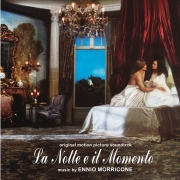
1995年にアンナ・マリア・タトー監督が、18世紀のフランスを舞台に、城に集った男女の艶めかしい駆け引きを綴った放蕩作家フィスの官能小説を映画化。エンニオ・モリコーネによる傑作サウンドトラックがCDで再発売!
トラックリスト音楽:
エンニオ・モリコーネは、陽気でテンポの速いバロック調のメインテーマ「A caccia di lei」(Tr.1)で幕を開け、その後「A candela spente」(Tr.7)や「A candela spente (Pt.2)」(Tr.20)でも再登場する魅力的なオーケストラ・サウンドトラックを通じて、18世紀の世界観を音楽で見事に表現した。作曲家は常に、ロマンティシズムとコメディの狭間でバランスを取った雰囲気を創り出しており、それは「Ballerina」(Tr.3)、「Sesso e ironia」(Tr.4)、「Amore e gioco」(Tr.5)、「All'aria aperta」(Tr.9)、そして「Cinismo e amore」(Tr.13)に聴き取ることができる。愛のテーマは、「La notte e il momento」(Tr.6)、「La notte e il momento(Pt.2)」、「Alla ricerca d'amore」(Tr.12)、そして「Un viaggio pensieroso」(Tr.15)で現れ、シモーナ・パティトゥッチが歌う「The loving game」(Tr.2、Tr.23)でも再び聴くことができます。18世紀特有の雰囲気は、「Un clavicembalo」(Tr.10)の音色、 「Spiegazioni di torture」(Tr.11)の背景として流れる神秘的で宙に浮いたような弦楽器のトレモロ、そして「Tromba e cavalli」(Tr.14)の管楽器と弦楽器による荘厳な行進曲によって醸し出されている。1995年、ソニーは作曲家自身が監修したCD(Epic 478475 2)を発売し、2011年にはGDMが、エンニオ・モリコーネの承認を得た6曲のボーナストラックを追加して、この音楽をCD(CD CLUB 7110)として再発売した。この58分28秒のアルバムは、エンニオ・モリコーネの音楽的偉業への賛辞として、このサウンドトラックを市場に再び送り出すものである。
Beat Records is pleased to reissue on CD the brilliant OST by Ennio Morricone for the romantic film La notte e il momento, directed in 1995 by Anna Maria Tato with a screenplay by Anna Maria Tato and Jean-Claude Carriere, photography by Giuseppe Rotunno, editing by Ruggero Mastroianni, music by Ennio Morricone, production by Arthur Pictures, Societe Francaise De Production (Sfp), and Cecchi Gori Group - Tiger Cinematografica, distribution by Cecchi Gori Group, and a cast featuring Willem Dafoe, Lena Olin, Jean-Claude Carriere, Miranda Richardson, Carole Richert, Christine Sireyzol, Guy Verame, Clifford De Spenser, Pascale Dinizani, and Ivan Bacciocchi.
The plot:
In eighteenth-century France, a gallant writer is hosted by a rich and seductive marquise in her castle. Every night, the young man sneaks into his hostess's room and engages in a verbal and amorous duel with her consisting of propositions and recollections, such as when he was imprisoned for his morally reprehensible conduct. In prison, he had kept strange company in the neighboring cell, who sought to test his amorous faith with notes, food, and even young women. A game of "blind man's buff" in the garden allowed him to seduce Armande, a young woman as available as she was, in his opinion, boring. The skirmish continues with attempts at seduction by the dandy, which the marquise rebuffs with ever-decreasing determination.
The writer also recalls a detailed description, with figurative demonstration, of the ancient torture of stocks inflicted on him by the sadistic yet courteous prison governor, but the memory of the wedges and the description of shattering bones gives way to the less bloody but fiery summer afternoon in which the beautiful Julie, found undressed on a sofa, is convinced by the writer, with a meticulous practical test, that the physicists' theory of heat-induced weakening of virile energy has serious flaws. The man's tales inflame the marquise, who in turn recounts the time she exchanged clothes with an opera dancer to be seduced by a man she was passionate about and who paid her, believing she was the other woman, at which point the writer reveals to her that the man, her friend, knew full well whom he was seducing. The marquise, after finally giving in to the seducer's demands, reveals that she is the unknown cellmate who, upon learning of his imprisonment, forced her friend the governor to imprison her alongside him.
The music:
Ennio Morricone perfectly represented the eighteenth century in music with a fascinating orchestral soundtrack introduced by the cheerful and fast-paced baroque main theme "A caccia di lei" (Tr.1), reprised in "A candela spente" (Tr.7) and"A candela spente (Pt.2)" (Tr.20). The composer always created atmospheres balanced between romanticism and comedy, as heard in "Ballerina" (Tr.3), "Sesso e ironia" (Tr.4), "Amore e gioco" (Tr.5), "All'aria aperta" (Tr.9), and "Cinismo e amore" (Tr.13). The love theme emerges in "La notte e il momento" (Tr.6), "La notte e il momento (Pt.2)", "Alla ricerca d'amore" (Tr.12), and "Un viaggio pensieroso" (Tr.15), which we hear again in "The loving game" (Tr.2, Tr.23) sung by Simona Patitucci. The purely eighteenth-century atmosphere is produced by the sound of "Un clavicembalo" (Tr.10), the mysterious and suspended string tremolos acting as background in "Spiegazioni di torture" (TR.11), and a solemn march for wind instruments and strings in "Tromba e cavalli" (Tr.14). In 1995, Sony published a CD prepared by the composer (Epic 478475 2), and in 2011, GDM reissued this music on CD (CD CLUB 7110) with the addition of six bonus tracks for which Ennio Morricone gave his approval. This 58:28 presentation returns this OST to the market as a tribute to the musical brilliance of Ennio Morricone.
1. A Caccia Di Lei 3:23
2. The Loving Game 4:20
3. Ballerina 2:05
4. Sesso e Ironia 1:59
5. Amore e Gioco 2:12
6. La Notte E Il Momento 3:30
7. A Candele Spente 2:54
8. Ritrovati 3:04
9. All'Aria Aperta 2:19
10. Un Clavicembalo 2:03
11. Spiegazioni Di Torture 3:34
12. Alla Ricerca D'Amore 2:41
13. Cinismo E Dolore 2:56
14. Tromba E Cavalli 1:55
15. Un Viaggio Pensieroso 1:44
16. Il Labirinto E Il Topo 1:32
17. In Camera 3:43
18. La Notte E Il Momento (# 2) 3:39
19. Sesso E Ironia (# 2) 1:01
20. A Candele Spente (# 2) 0:46
21. Tromba E Cavalli (# 2) 1:51
22. Un Viaggio Pensieroso (# 2) 1:16
23. The Loving Game (# 2) 3:06
music composed and orchestrated and conducted by Ennio Morricone
"The loving game" by C.De Natale - E.Morricone sung by Simona Patitucci
(P) 1994 EMI Music Publishing Italia srl / Sony Music Publishing (Italy) srl
stereo TT 58:28